Sacred Geometry
Architecture of the Buddha’s Enlightened mind
The Kālachakra Stūpa
Connecting our Cosmic, Subtle and Enlightened Nature
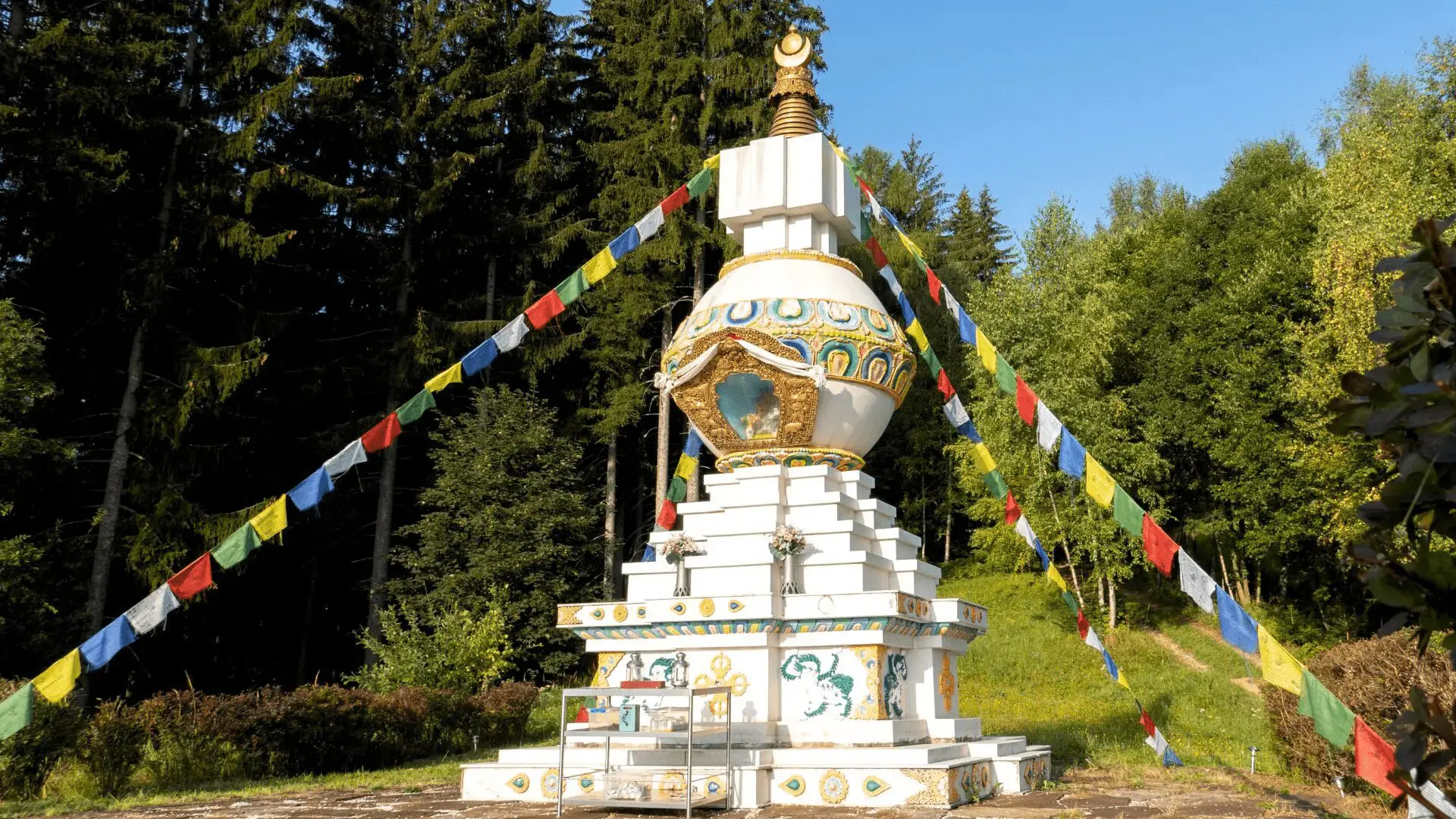
Kālachakra Stūpas aren’t connected to events in the Buddha’s apparent life as a human in India, but rather to the symbolism of the Kālachakra Tantra as taught by the Buddha in his higher Sambhogakāya Buddha form of Kālachakra. It is a visual and symbolic representation of enlightened reality as described in the Kālachakra Tantra — pointing beyond ordinary appearances toward deeper truths of time, interdependence, and the possibility of complete liberation. It conveys Kālachakra’s essential topics: the relationship among the outer cosmos, the inner subtle-body maṇḍala, and our own enlightened nature.
Shared Global Vision of Peace
Kālachakra Stūpas Found Across the Globe
Kālachakra Stūpas are found in many regions worldwide and serve as sacred supports for peace and harmony. The Kālachakra teachings have a special connection with the Bodhisattva Pure Realm of Śhambhala and a Buddha’s prophecy of peace and harmony on Earth. The altruistic, compassionate beings of Śhambhala have vowed to liberate our world from suffering caused by bias, materialism, and religious extremism so that we may harmonize our minds into a state of tolerance and eventually realize that we all share a common nature. This will bring a Second Golden Age of peace and harmony to our world, according to Buddha’s own prophecy. It is for this reason that Kālachakra Stūpas have become a beacon of hope and a representation of humanity’s peaceful future.
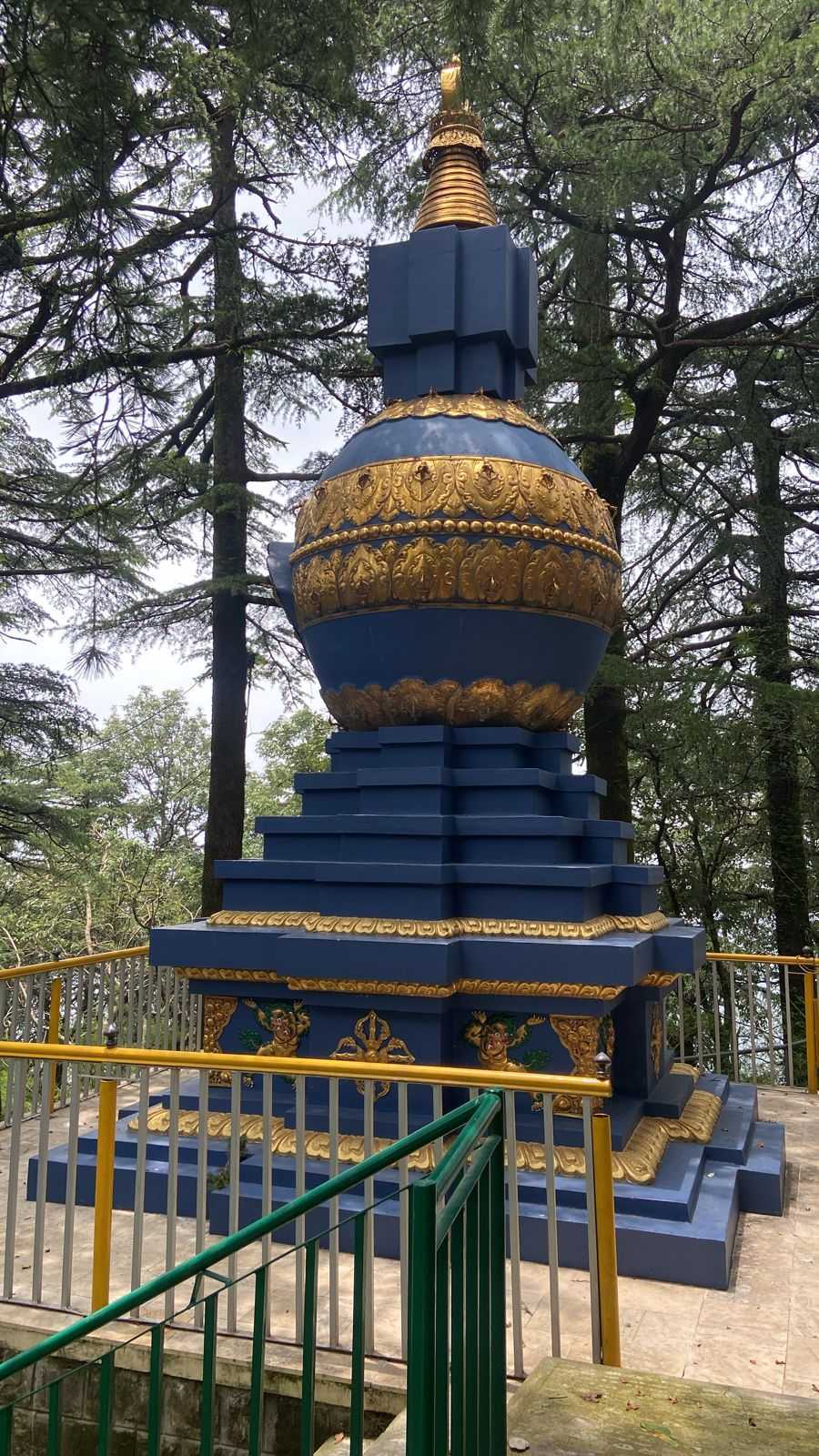
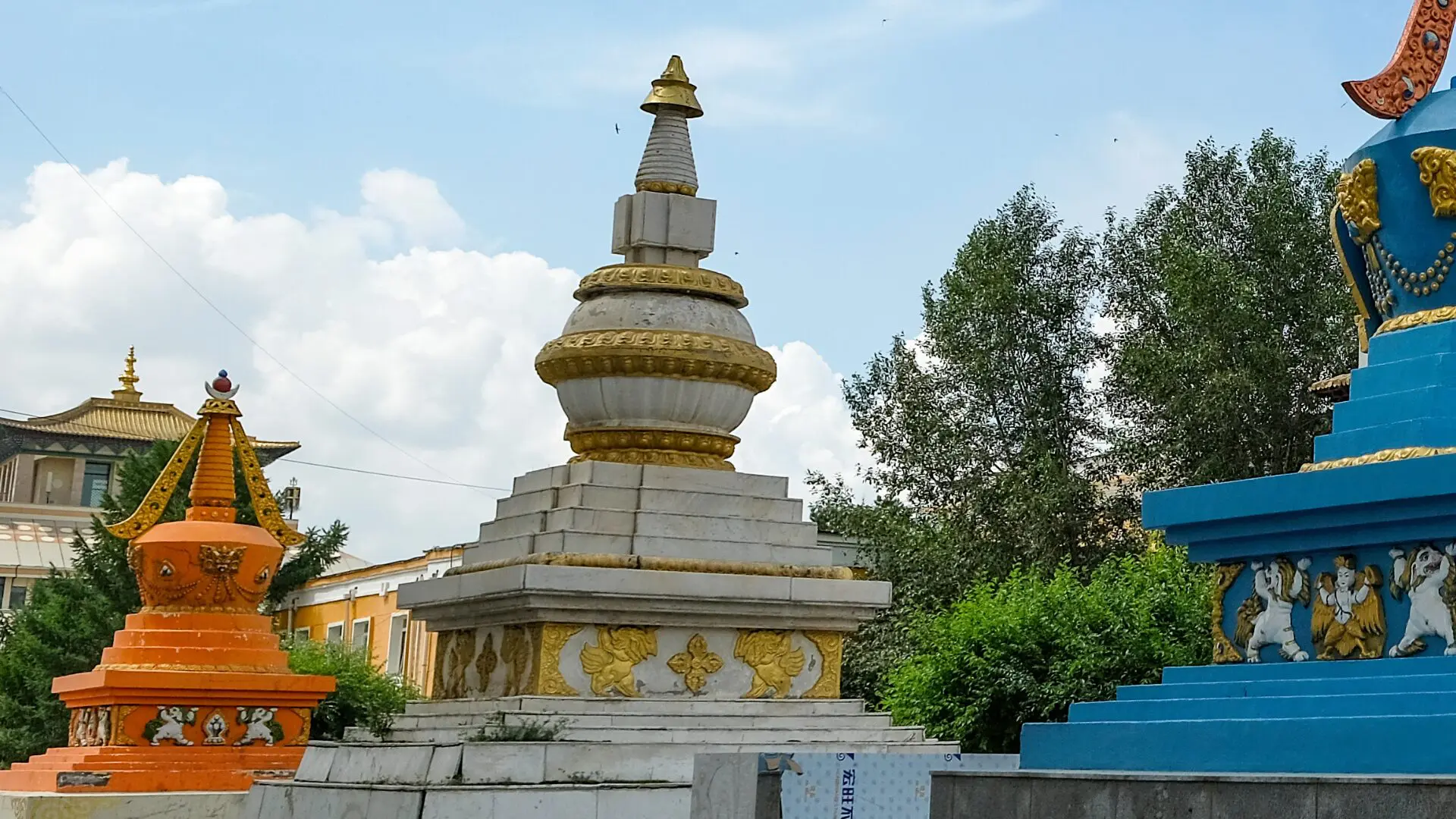
There are several styles and interpretations of the Kālachakra Stūpa, which align with the instructions in the Kālachakra Tantra taught by the Buddha. Various masters over time have interpreted the instructions differently while maintaining the essence. The form that is at Dzokden Kalapa is found in the Gelug tradition and is inspired by the HH Dalai Lama’s World Peace Stūpa in Dharamshala.
Pictured Right
World Peace Stūpa in Dharamsala
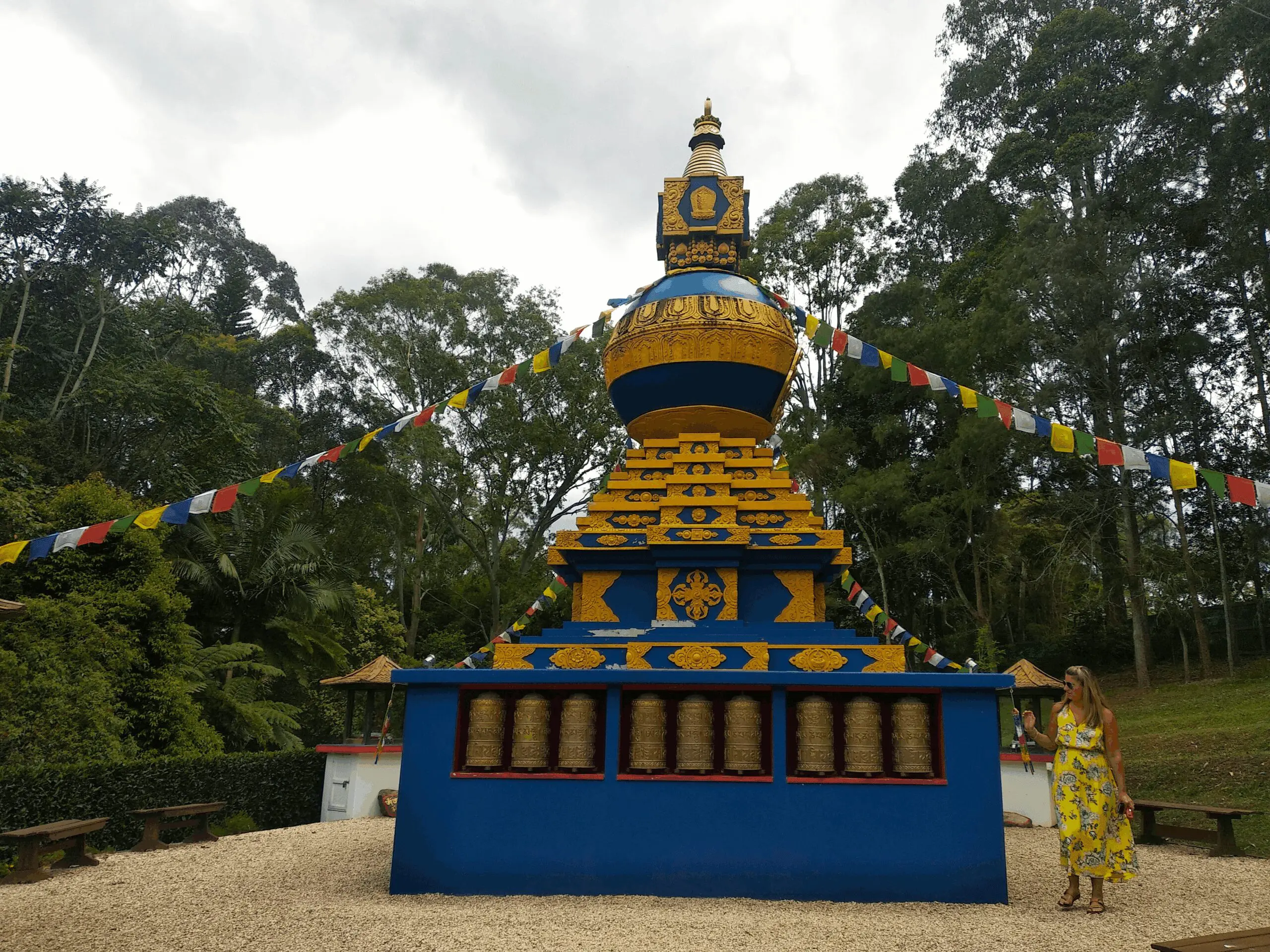
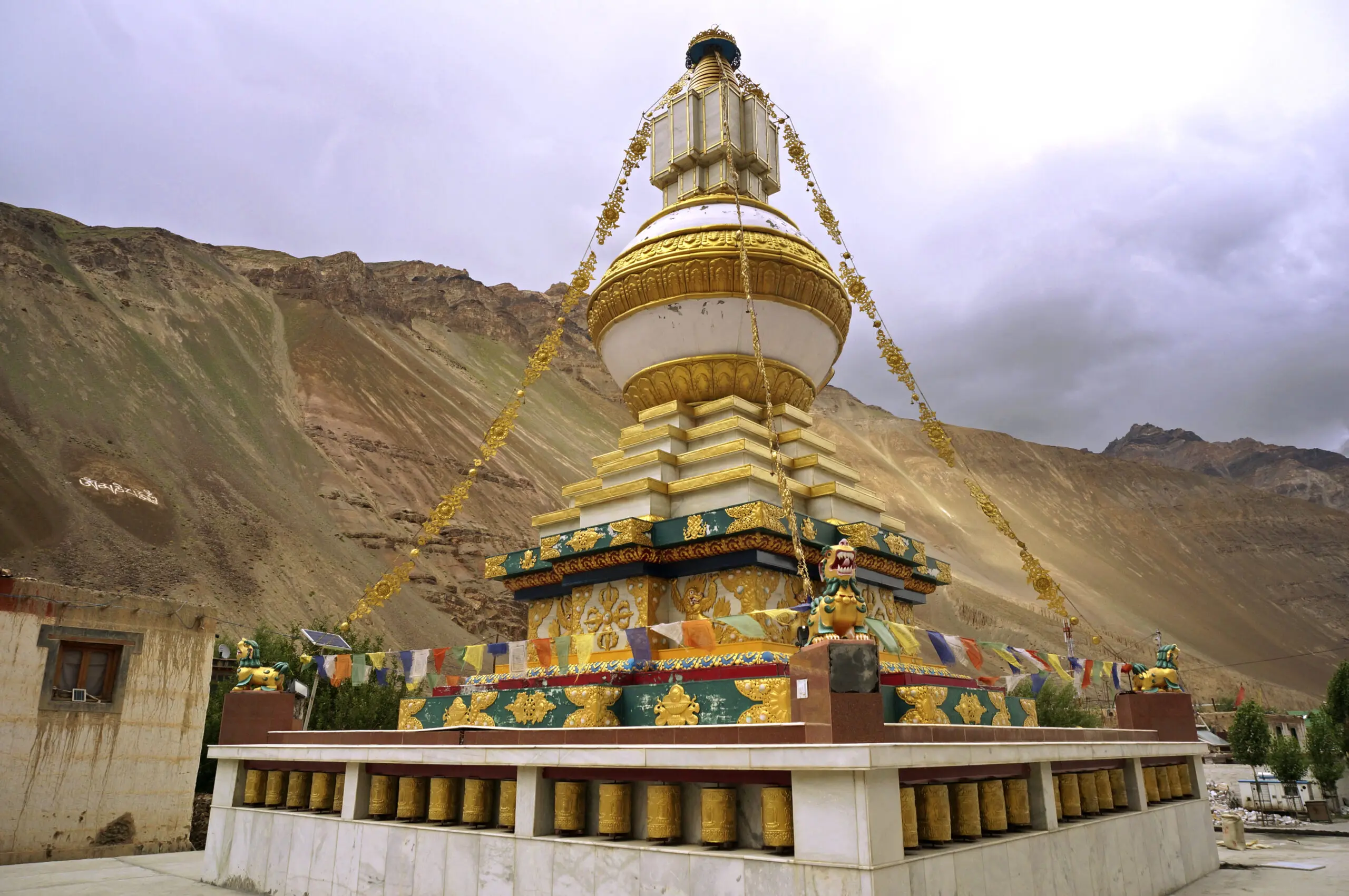
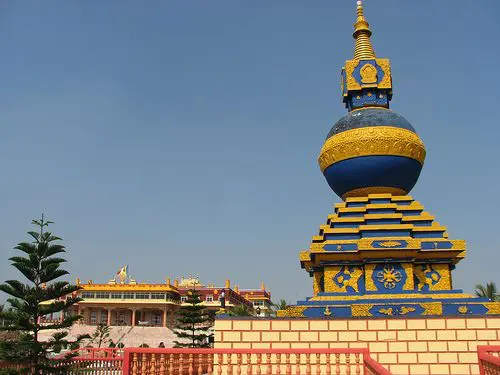
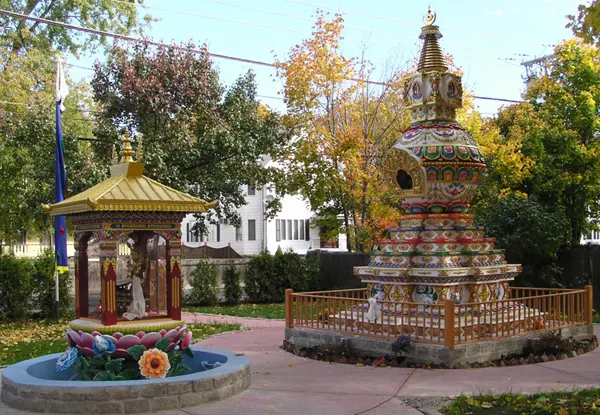
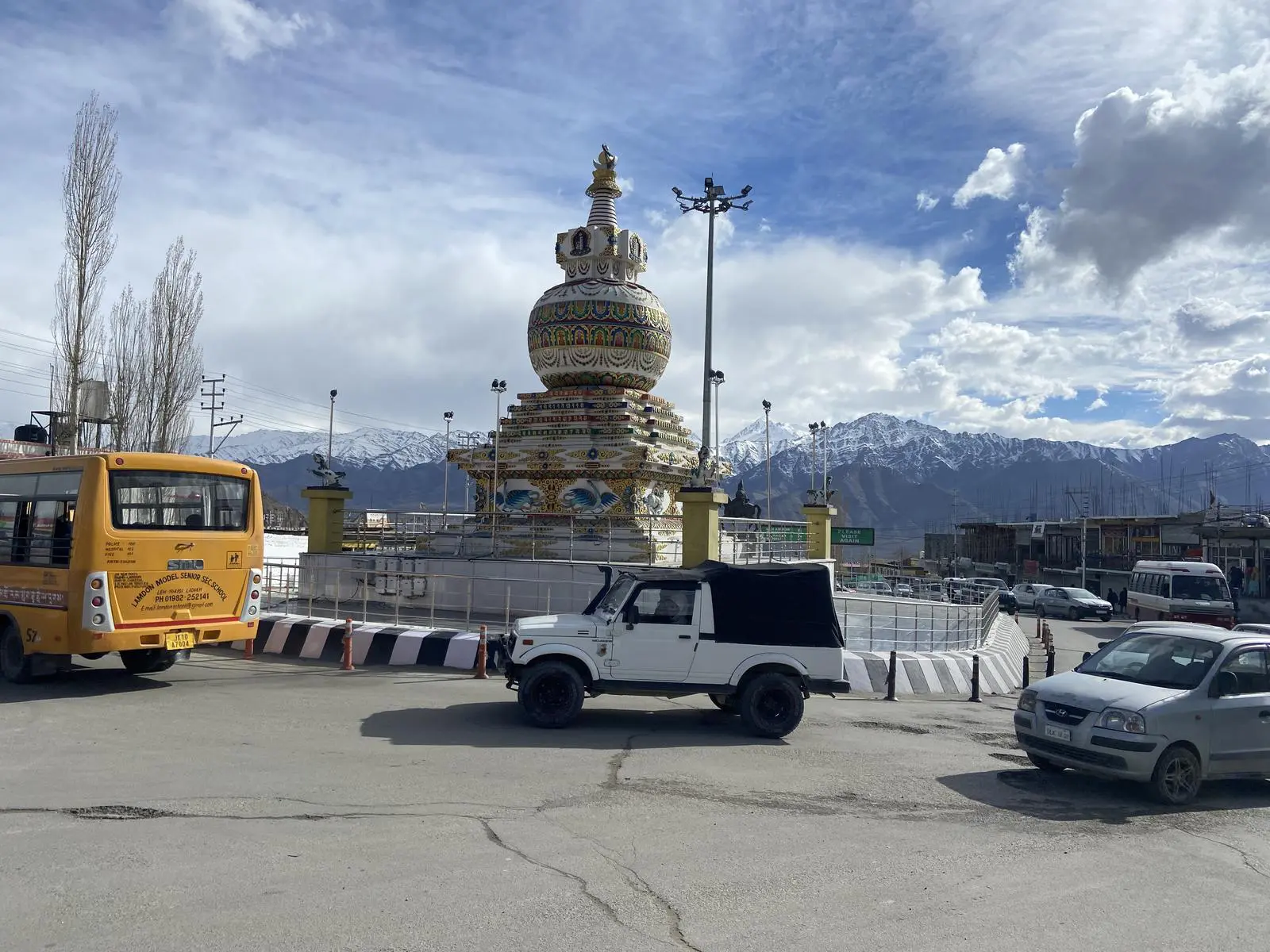
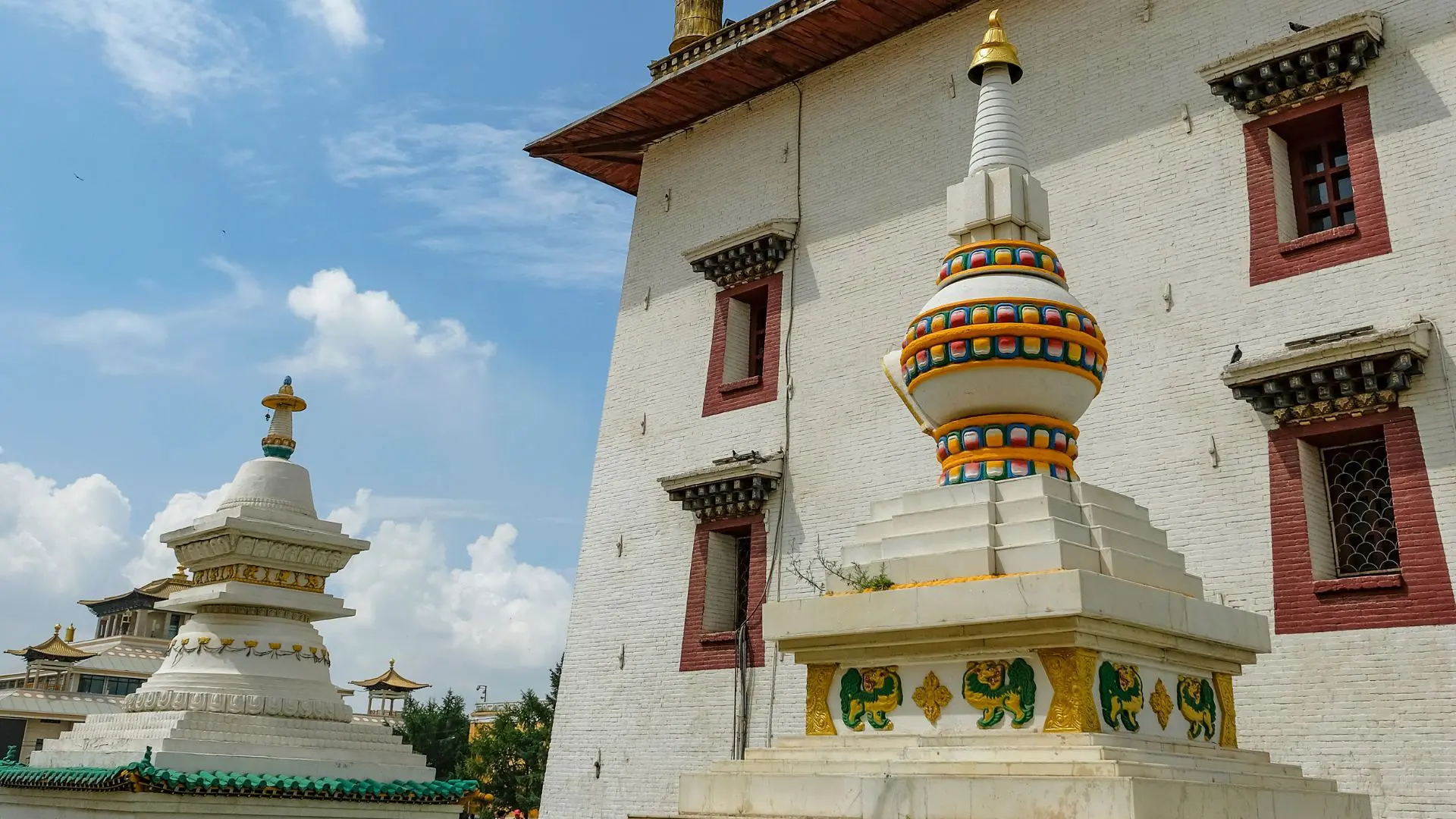
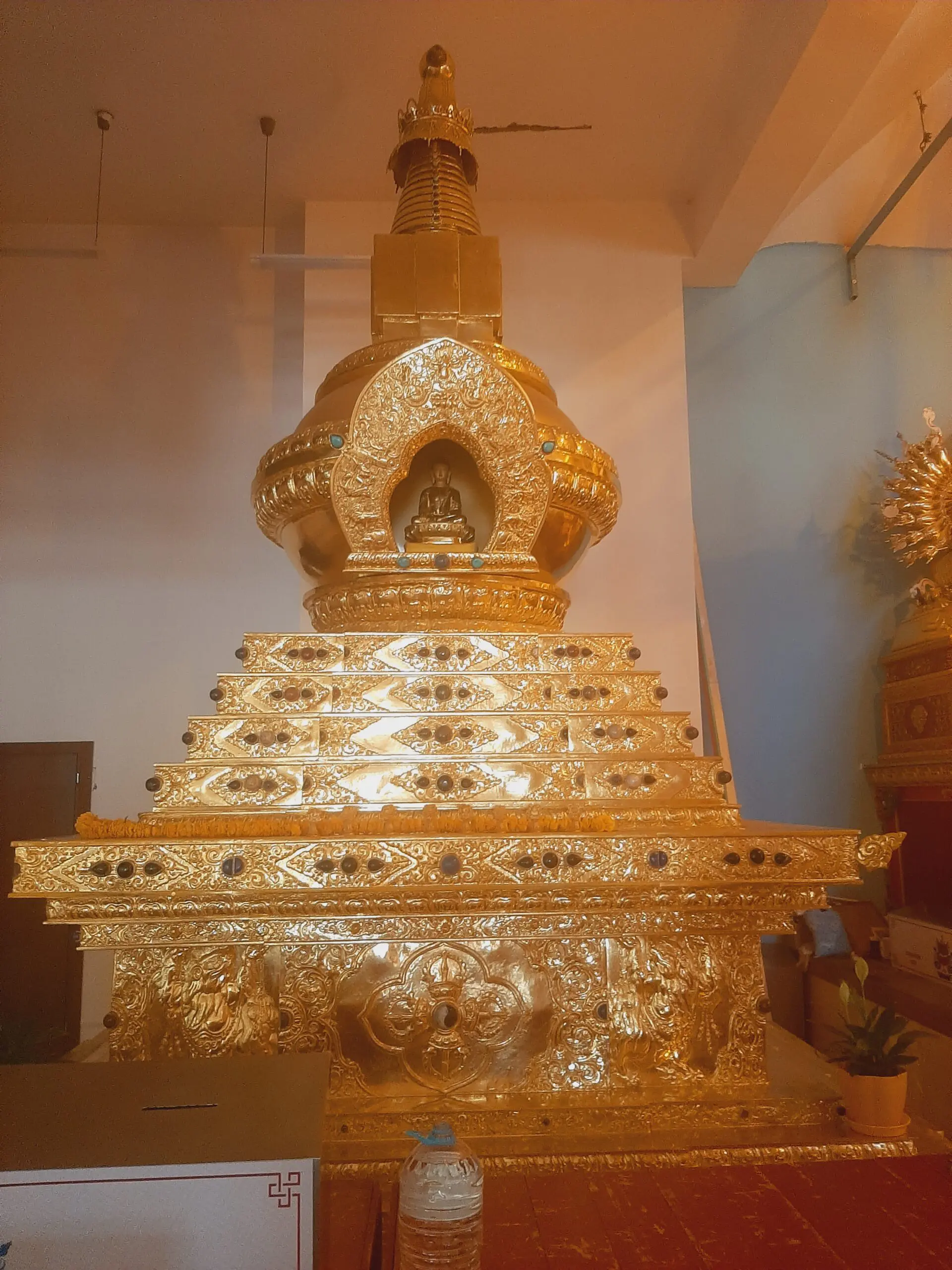
Pictured Below from Left to Right
Australia, Spiti, India, Kurukulla Center FPMT, Ladakh, Gaden Monastery, Mongolia (3)
History of the Kālachakra Stūpa in Austria
2001 – 2002 Built by She Drub Ling Graz
Powerful Relics in the Stūpa
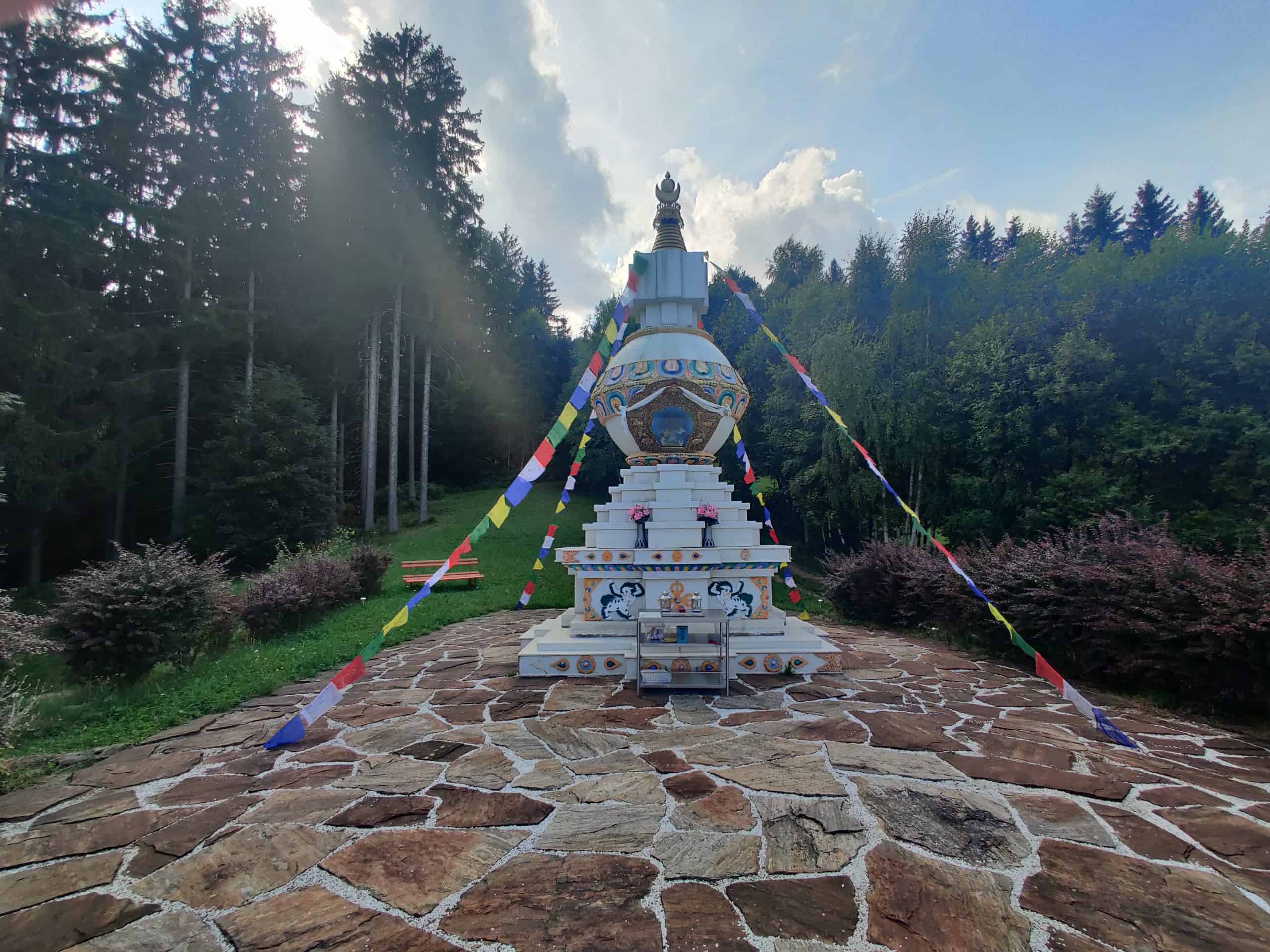
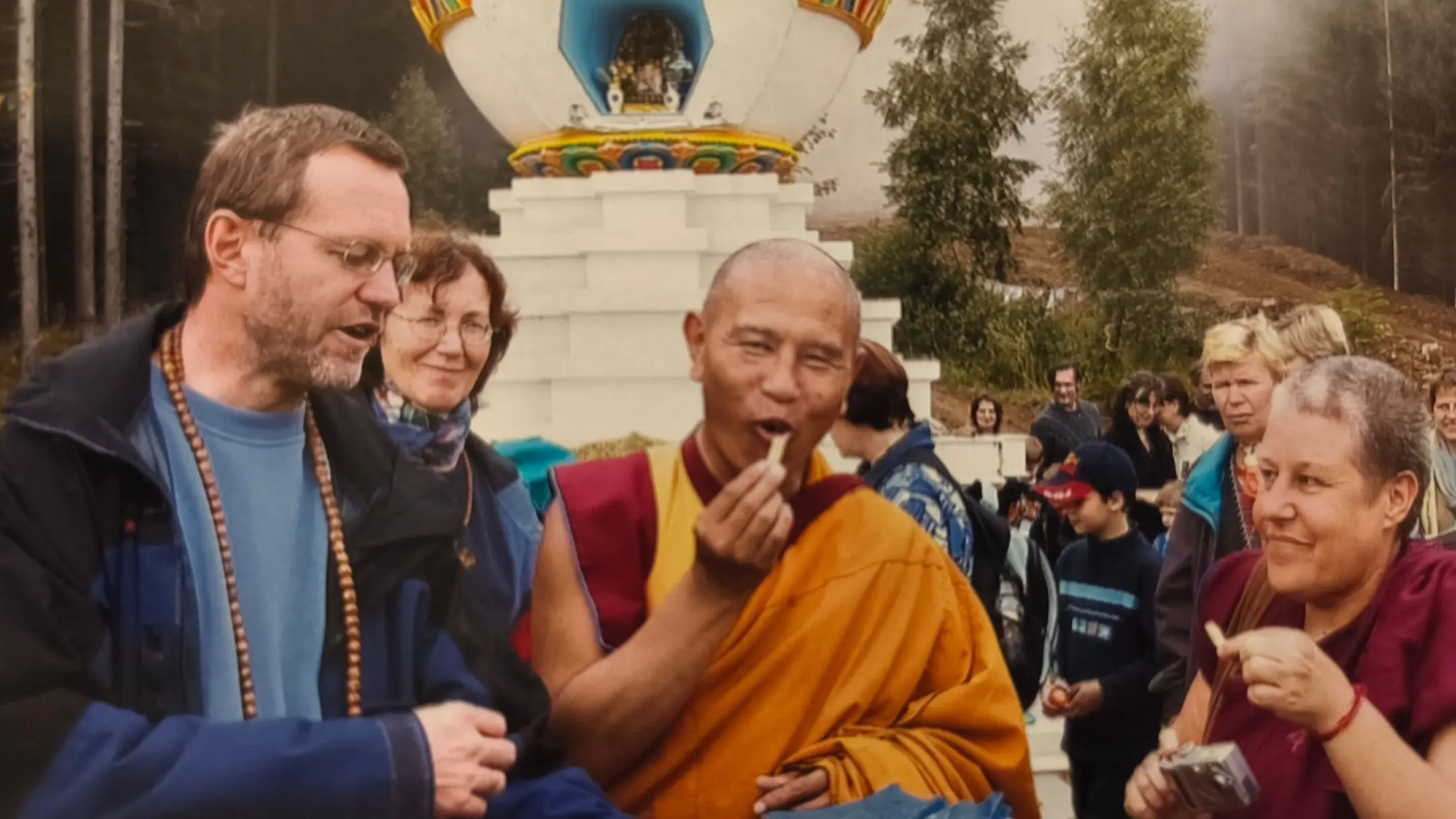
This Kālachakra Stūpa in Garanas, Austria is filled with precious substances, mantras, sacred texts, blessed items, and relics from great masters of various lineages. Although these sacred contents are not visible from the outside, they are traditionally understood to make the stūpa a living vessel of blessings, benefiting all beings that come into contact with it even indirectly, such as animals. The relics include items attributed to Buddha Śhakyamuni and to spiritually realized beings such as Padmasambhava, Atiśha, Marpa, Milarepa, Longchenpa, Je Tsongkhapa, Jamgön Kongtrül, Jamyang Khyentse Wangpo, Dilgo Rinpoche, Lama Yeshe, and many others.
Abbreviated List of Sacred Contents in the Kālachakra Stūpa
Some of Relics Blessings the Space
Buddha Śhakyamuni & Early Buddhist Relics
- Part of Buddha Śhakyamuni’s finger received in Tibet
- Buddha Kaśhyapa’s relic found in the statue of Jowo Mikyo Dorje
Great Yogis and Masters of India and Tibet
- Part of a pill made with Milarepa’s blood
- Relics from Guru Rinpoche (Padmasambhava) and Longchen Rabjam
- Robe of Lama Atiśha
- Robe of Marpa
- Dingwa (seat cover) of Je Tsongkhapa
Great Lineage Master's Holy Objects
- Robe of the Great Bodhisattva Tongme Sangpo
- Robe of the first Rading Rinpoche (first Gaden Tripa)
- Clothes and leg from Tulku Urgyen Rinpoche
- Clothes and Relics from Nyingma Lamas such as Jamyang Khyentse Wangpo and Dilgo Khyentse
- Rächen Schonnu’s hair (one of the 16 “Great Sons” of Machig Labdrön)
- Part of a pill made with the heart of Drikung Kyoba Rinpoche
Rare Relics and Sacred Substances
- HH 13th Dalai Lama’s hair
- Holy hairs from Serkhong Dorje Chang and Serkhong Tsenchab Rinpoche
- Relic of Heruka bone of Lama Yeshe’s body
- Stone from Mahākāla Cemetery provided by Kirti Tsenshab Rinpoche
- Salt from Jamgön Kongtrul Lodrö Rinpoche
- Small pill with more than 700 relics
Consecration Ceremony
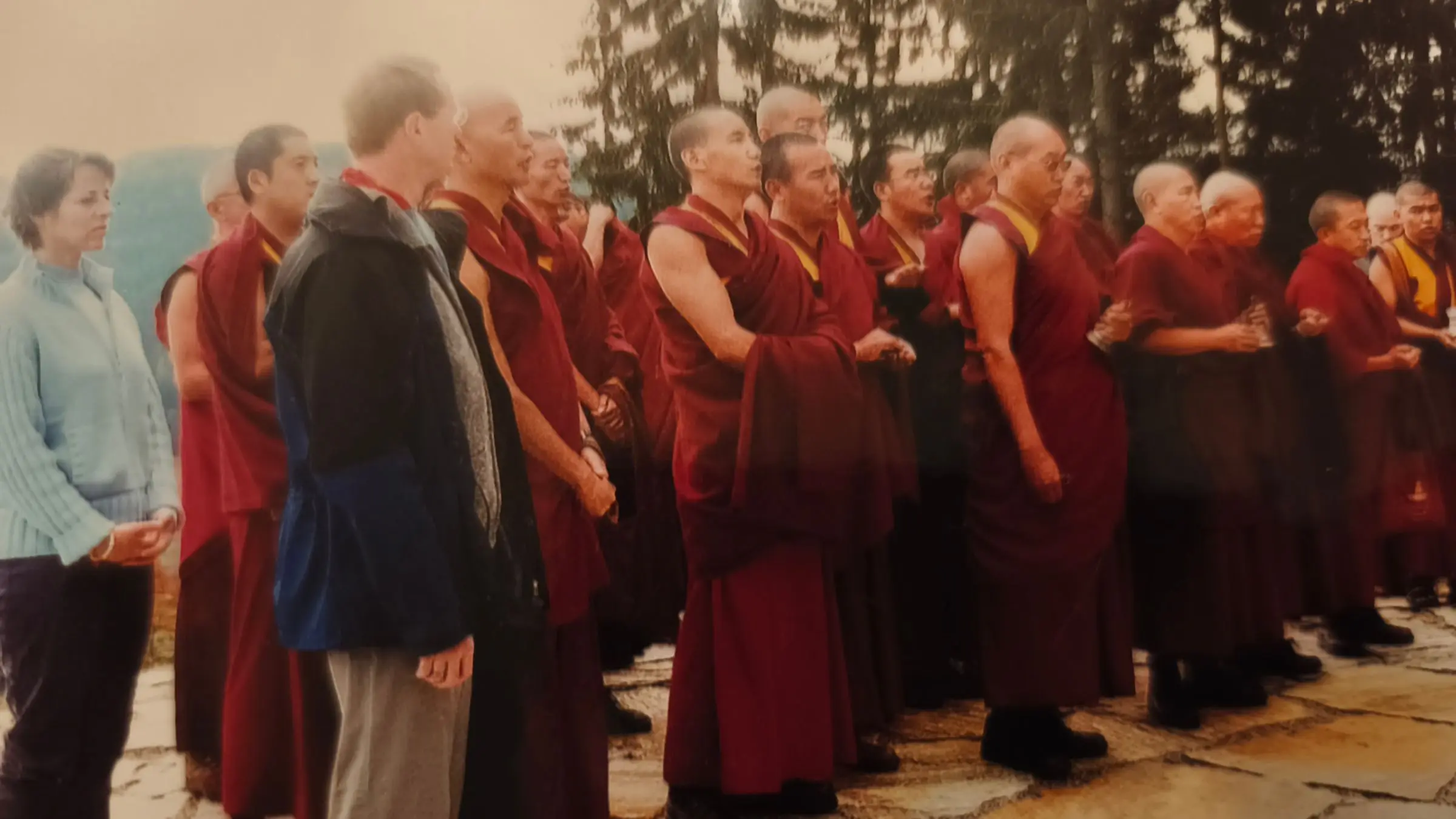
by Jhado Rinpoche and Monks from Namgyal Monastery
Restoration of the Stūpa
2022 – 2025 Dzokden’s Restoration and Renewal
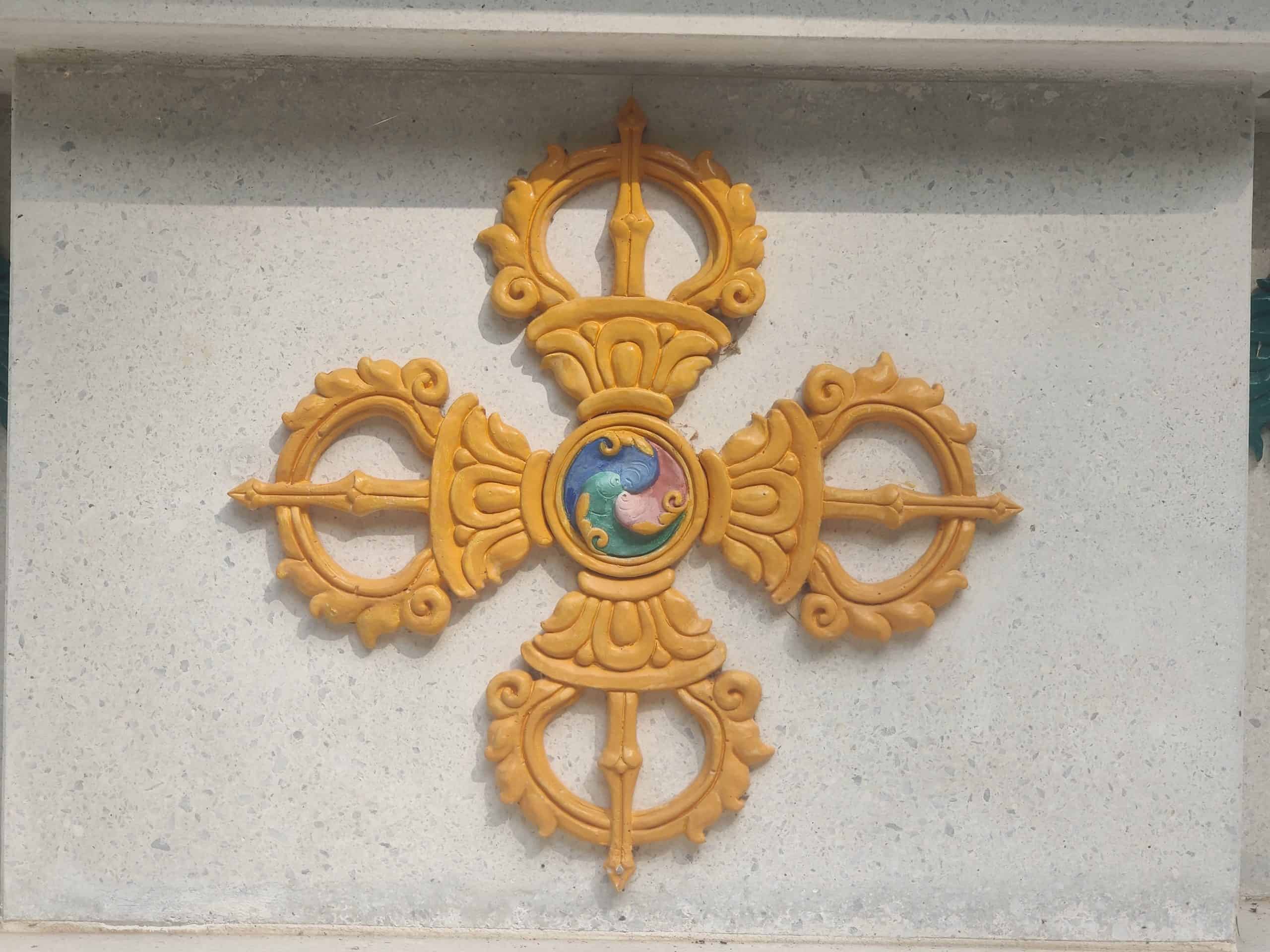
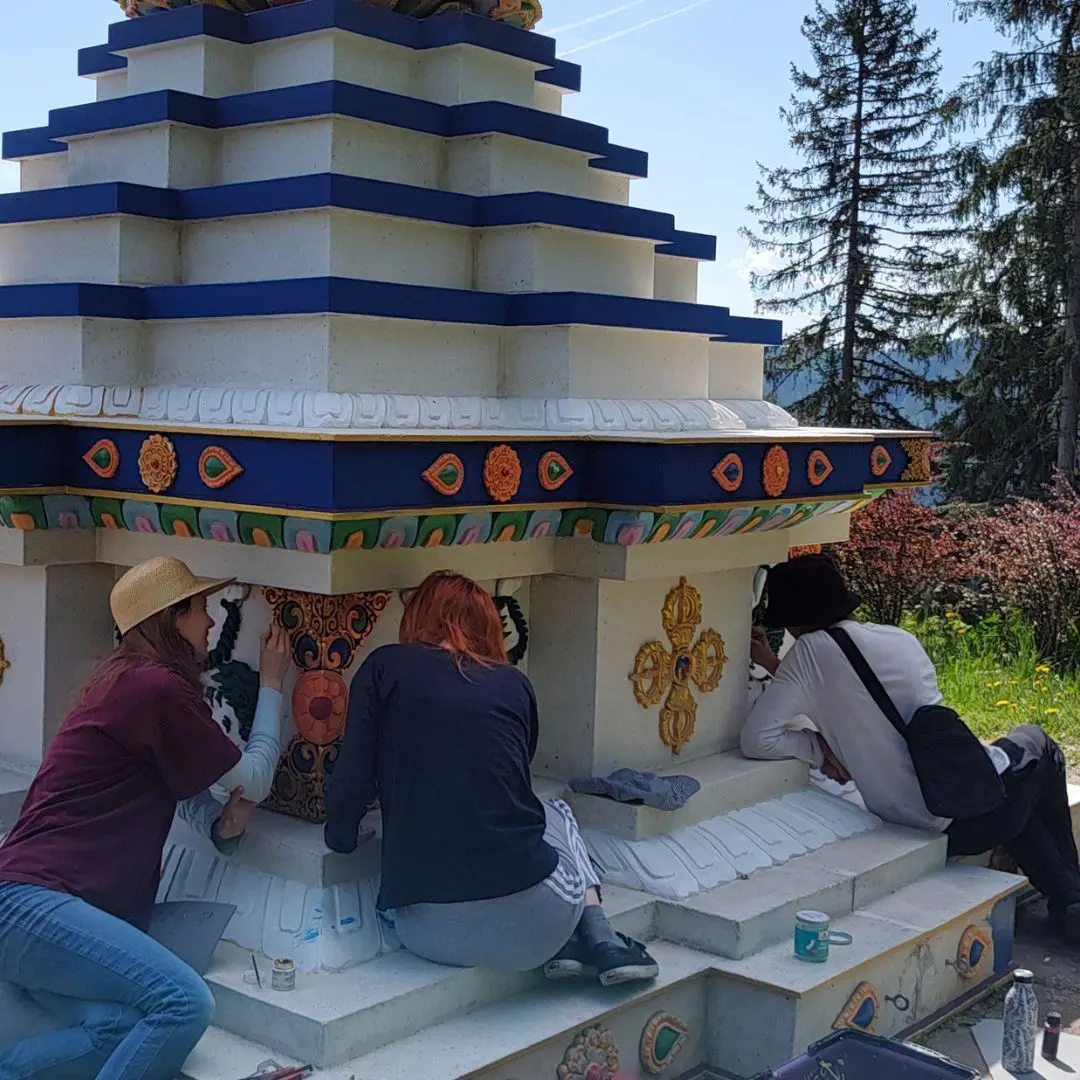
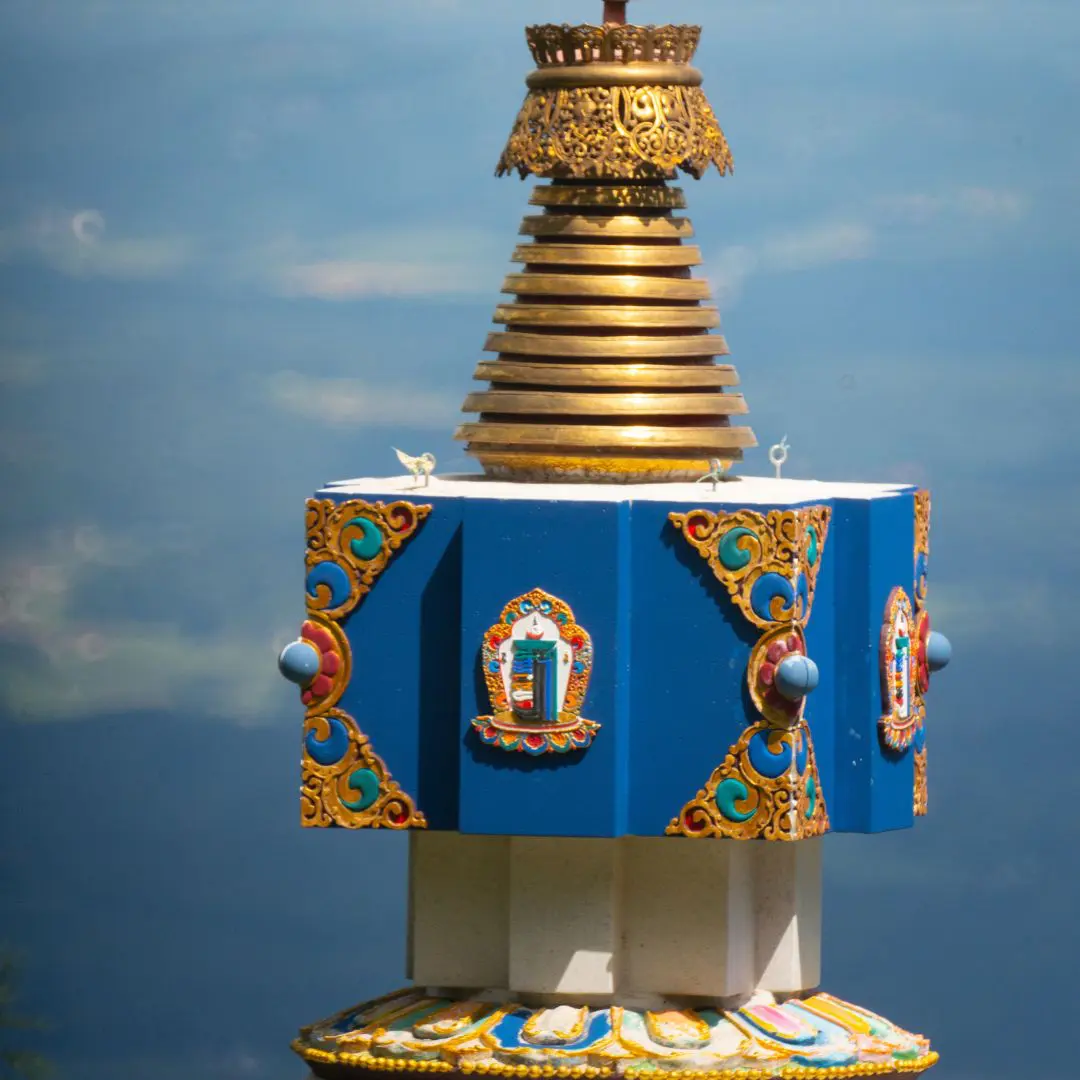
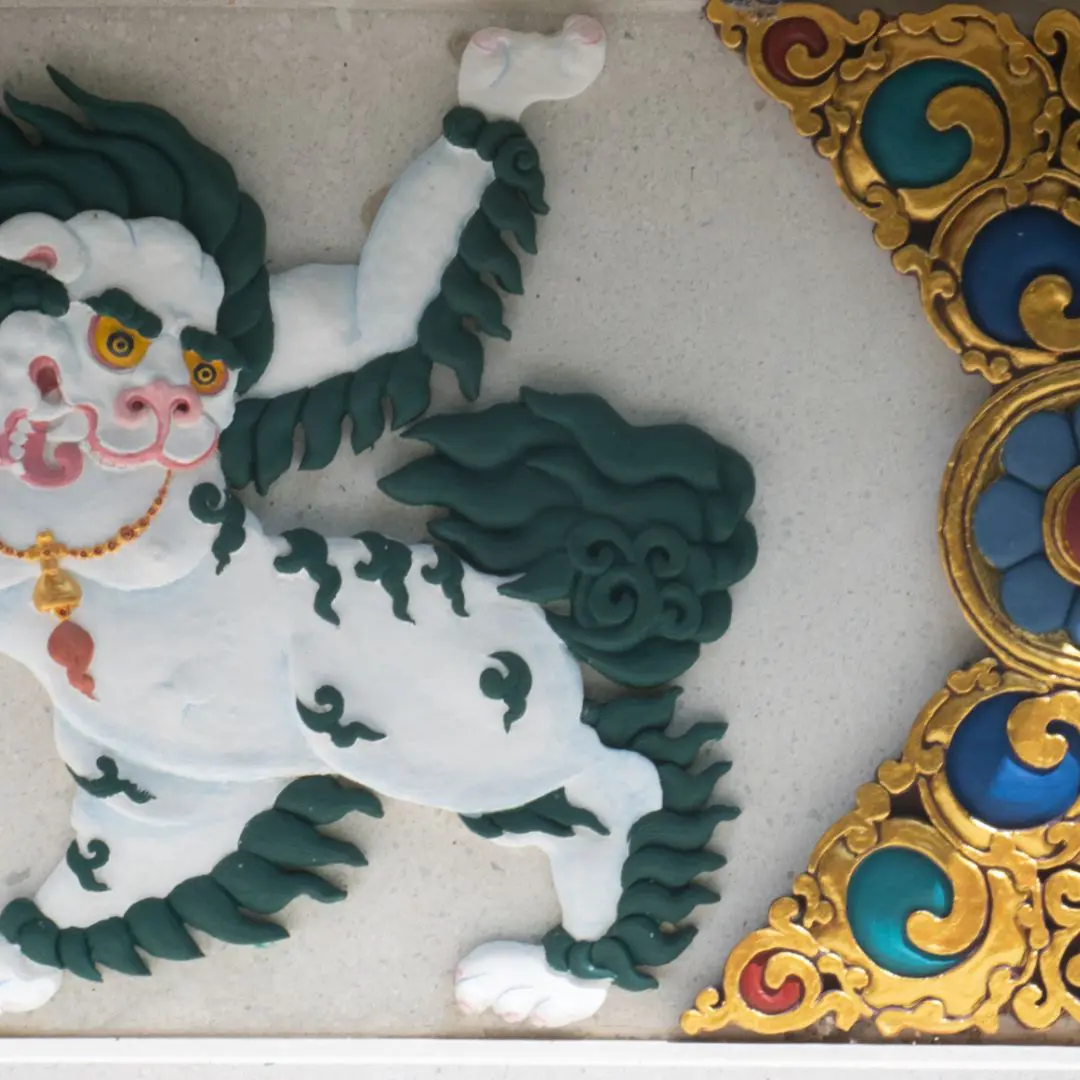
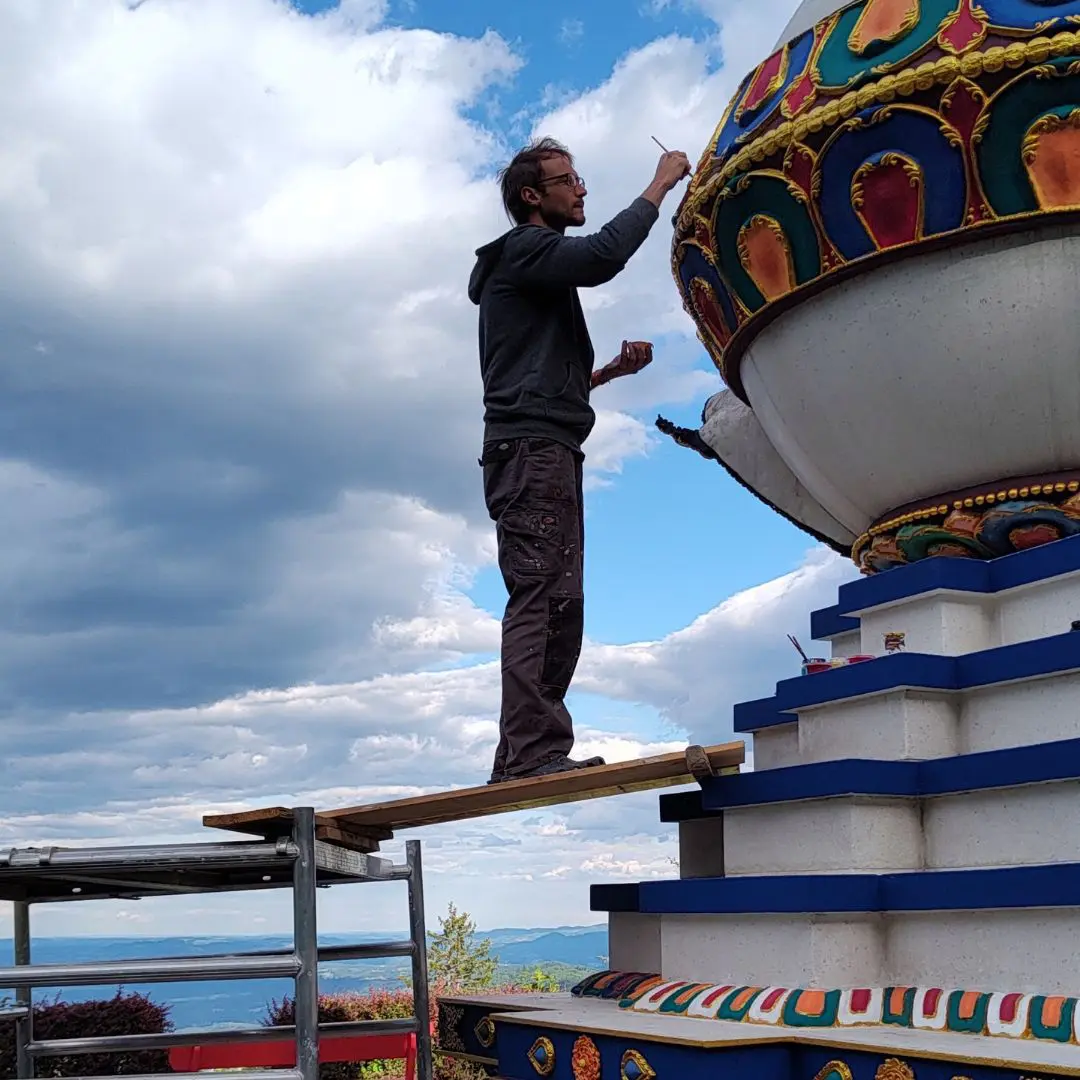
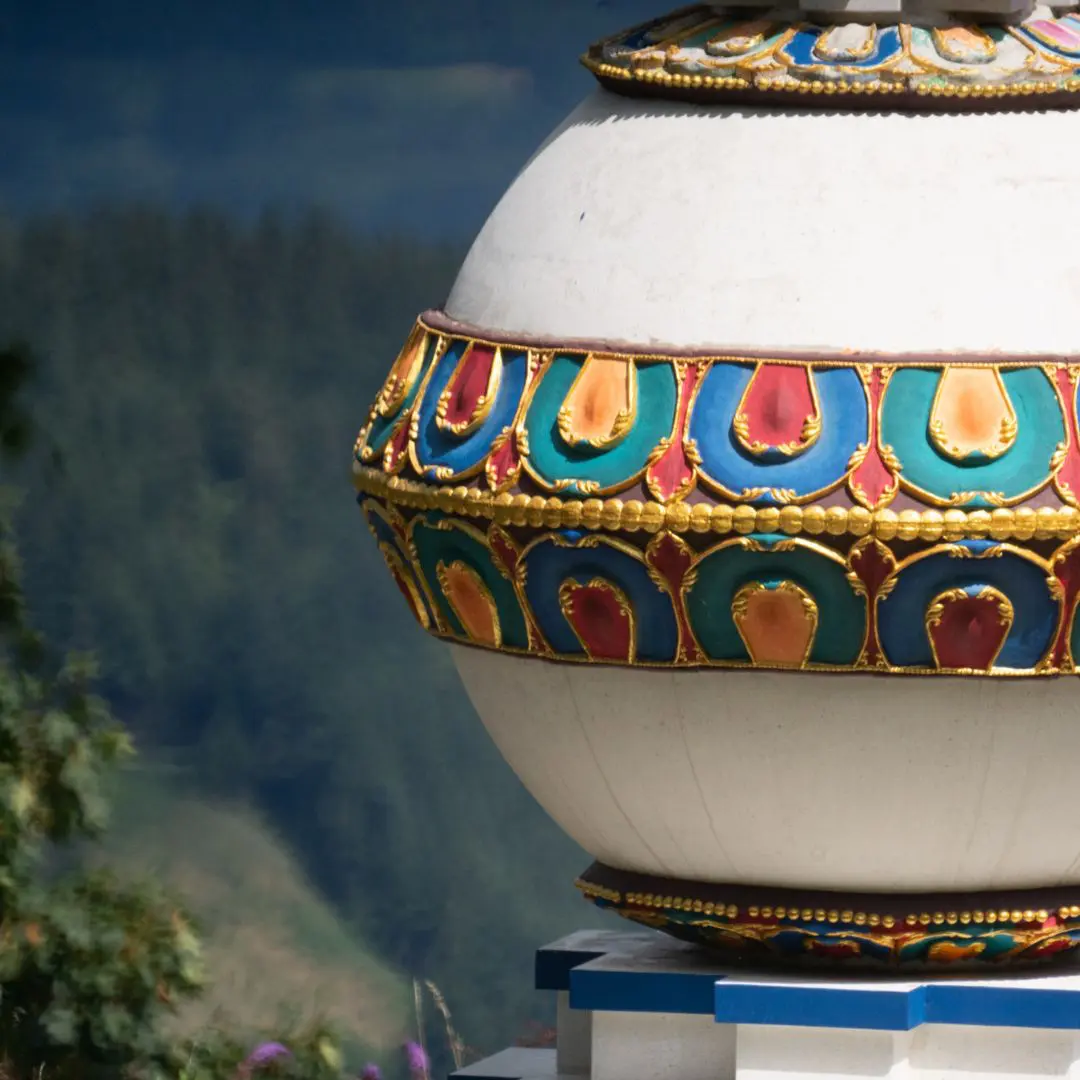
When Dzokden received the gift of the retreat center from She Drup Ling Graz, the Kalapa group made an aspiration to restore and repaint the Kālachakra Stūpa. Following fundraising, the community of international volunteers began restoration in September 2022 and completed the final painting details in October 2025. The Kālachakra Stūpa has been partially repainted blue in honor of Vajrasattva and the Kālachakra tradition, in which the rare blue Vajrasattva symbolizes the inseparability of the Five Buddha Families. Special molds were created to restore the ornaments and to add new lotus rings with carefully selected colours. In addition, following Shar Khentrul Rinpoche’s instructions, the 10-fold powerful monogram symbol of Kālachakra, according to Jetsun Tāranātha’s version, was added in all four directions. The Kalapa group, with Rinpoche’s consent, decided to paint all four monograms with different color patterns according to the textual instructions for different visualizations, which can be found in the writings of the great master Bamda Gelek Gyatso. These enhancements honor not only local visitors by offering a fresh perspective on this important local tourist and pilgrimage site, but also the living practice of the Kālachakra-Jonang lineage at the Dzokden Kalapa Retreat Center today, while respectfully preserving the stūpa’s original purpose and precious historical origins.
Benefits of stūpa restoration
In the Buddhist tradition, creating or restoring and repairing holy objects is considered a profound act of virtue. Traditional texts explain that those who repair damage to a stūpa receive extraordinary benefits, described as engaging in powerful enlightened activities and ultimately attaining awakening. Restoring a stūpa is also meaningful because a stūpa continues to benefit beings silently over time — helping to purify negativity and inspire virtue in everyone who encounters it, even indirectly. In this way, caring for the stūpa is not only preservation of a sacred local monument — it is an ongoing offering of virtue and blessing for a more peaceful world.
Blessed for the Golden Age of World Peace
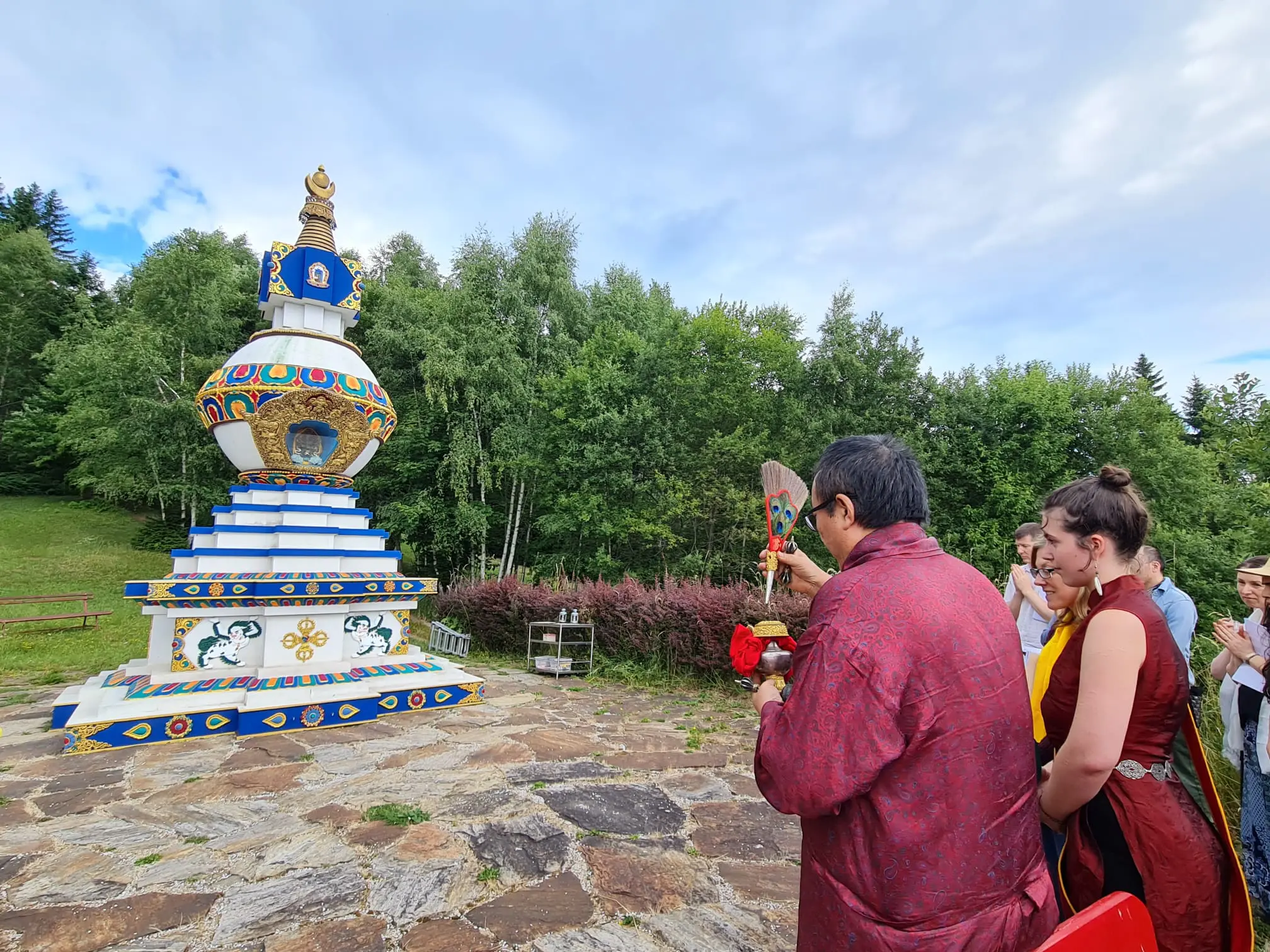
After the main restoration, enhancements and paintings were completed, Shar Khentrul Jamphel Lodrö Rinpoche offered a profound blessing of the stūpa during weeks of Kālachakra Empowerments and Kālachakra Vajra Yoga practice. Through this auspicious connection, the stūpa was further empowered to remain a living beacon of practice, purification, and realization for generations to come. This additional blessing was made to deepen the stūpa’s connection to Dzokden’s Second Golden Age Aspiration — and to support the flourishing of the Dharma through the profound view of the definitive meaning, unifying the path of Zhentong View with the living Kālachakra Six Vajra Yogas practice lineage, for the benefit of all beings.
Spread the Power of Kālachakra
A Cloud of Blessings Beyond Lineage Blanketing the World
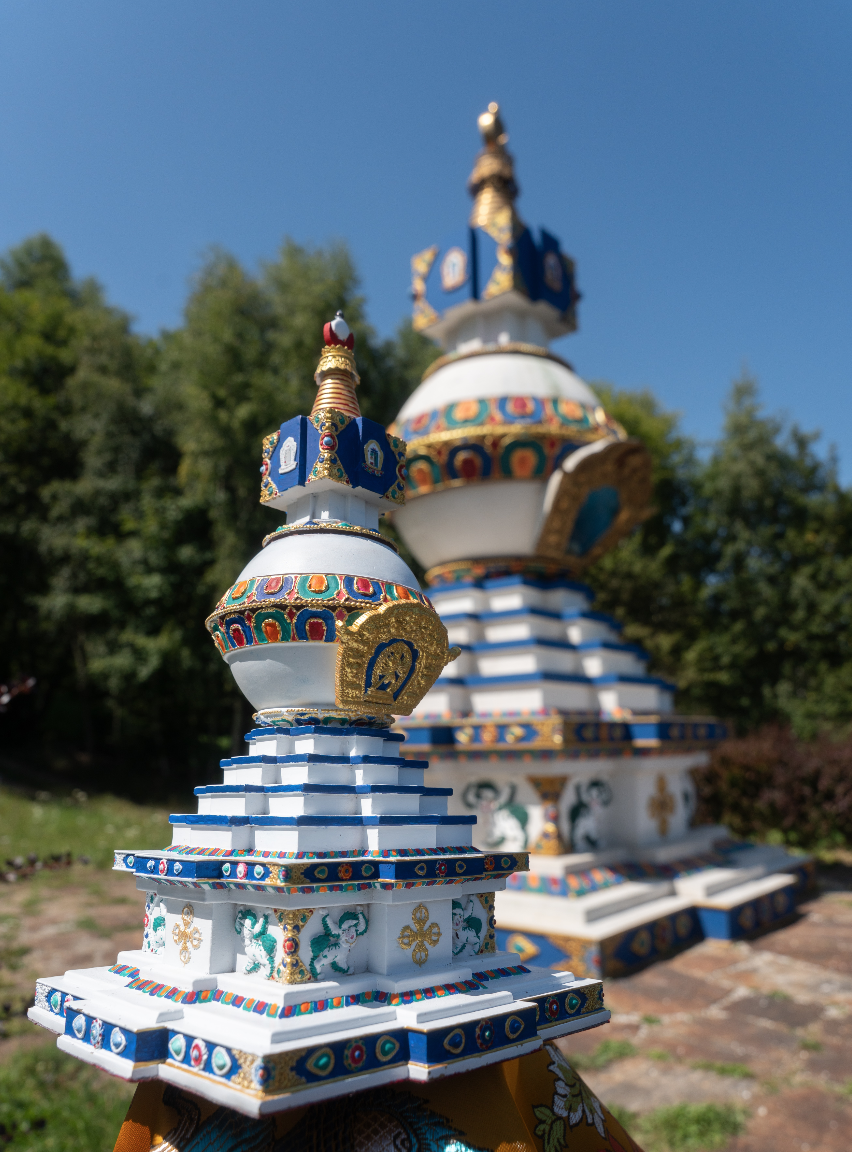
All traditions of Kālachakra share a common root in the profound practice lineages preserved from Śhambhala to ancient India, culminating in the Six Vajra Yogas. For this reason, the Kālachakra Stūpa can be understood as something larger than any single school, culture, or community — its deeper meaning is not limited by labels.
This stūpa is a living symbol of unity and blessing:
- Peace beyond boundaries, offering inspiration and benefit to all who visit
- Honoring many lineages, reflected in the relics enshrined within and the new restoration
- Dedicated to the Second Golden Age of Peace and Harmony: an auspicious time to manifest on Earth according to Buddha’s prophecy in the Kālachakra Tantra
It can also simply be seen for what it is: a beautiful, sacred monument casting a radiant field of blessings — encouraging each visitor to trust that not only is peace possible, it is something we will achieve together for our world one day. Help us bring these blessings to the whole world.
Practice at the Stūpa
Visit, Circumambulate, and Make Offerings
Liberation upon seeing
Stūpas are a direct blessing to anyone who sees them with an open heart, regardless of background. Visitors are welcome to come simply to be near the stūpa, walk mindfully, reflect, and cultivate wholesome intentions.
Circumambulate (Clockwise)
Walk around the stupa clockwise at least three times in a clockwise direction, mindfully and respectfully. Circumambulation is traditionally considered very powerful—helping purify negativity and create merit for success and spiritual growth.
Make offerings to the buddha
Offer candles, incense, or flowers with a sincere heart. It is considered very auspicious. As you offer, bring to mind what you wish to purify and transform, and generate the intention that your actions benefit all beings.
Reflect & Meditate Nearby the stupa
When a stūpa is blessed, it becomes a powerful support for awakening, helping anyone who comes into contact with it recognize their true nature. Sit quietly nearby and let the mind settle. You may rest in stillness, recite prayers or mantras, or generate love and compassion for the world.

dedicate your prayers to Global Awakening
At the end of your visit to the stūpa, pray that your visit and activities benefit all beings as limitless as space in the three times (past, present, and future) and ten directions (cardinal and intermediate ones). May all beings everywhere have peace and harmony, may they eventually reveal their own sacred truth.